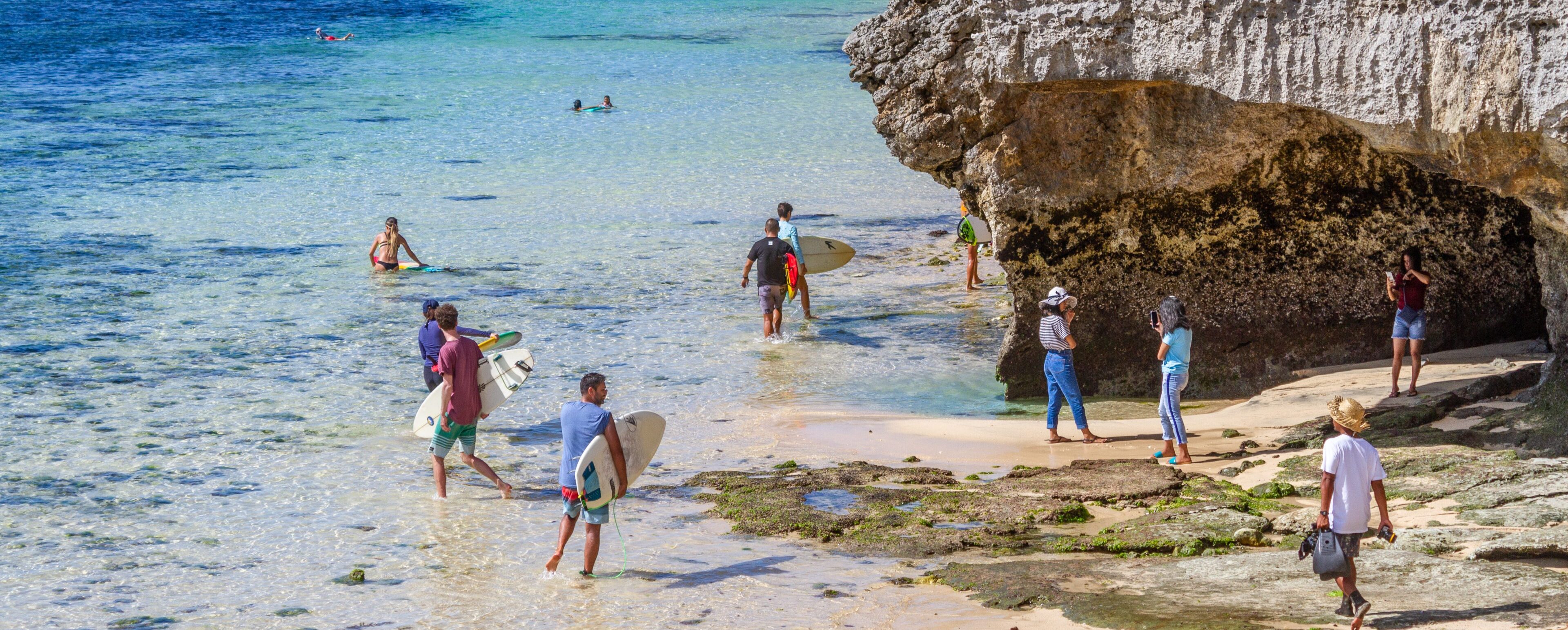
Bali has 73 documented surf spots — reef breaks, point breaks, river mouths and beach breaks spread across eleven surf areas. There is always somewhere surfable, whatever the swell, tide, wind or season. Bali is the world’s most consistent surf destination — a surfable wave every day of the year and good wind for surfing somewhere on the island every single day.
The dry season (April–October) brings SE trade winds offshore at the Bukit Peninsula’s west-facing breaks — Uluwatu, Bingin, Impossibles and Balangan at their best. The wet season (November–March) switches the wind northwest, turning the east coast and Nusa Dua into world-class surf. The shoulder months of April–May and October–November bring light winds and open every surf area simultaneously — often the finest surfing of the year.
A note on tides: most reef breaks work best at mid tide, but this varies significantly by spot. The individual guides below give precise tidal information for each break. Local knowledge matters — conditions change quickly and the right break on the wrong tide is a very different experience.
Uluwatu is the most consistent surf location in the world. It’s home to a variety of different surf spots to suit all levels, all nearby and easily accessible for the full range of surfing abilities from beginner, intermediate and advanced to expert big wave surfers and barrel riders. Whether you’re a beginner seeking to catch your first wave, an intermediate eager to progress, or an advanced surfer looking for a new challenge, you’ll find it all in Uluwatu.
Uluwatu is the most famous surf spot in Bali. Known for its consistent waves and stunning scenery, the waves at Uluwatu are some of the best in the world. Uluwatu attracts surfers from all over the world and has a legacy dating back to the 1970s when it was first spotted from the air.
If you’re searching for the best surfing experience in Bali, look no further than Padang Padang Lefts. Known as the Balinese pipeline, Padang Padang Lefts is the perfect wave machine. Padang Padang Lefts has earned its place as one of the world’s most coveted and challenging waves — a famous bucket-list destination for surfers from all over the world.
Baby Padang is also known as Padang Padang Rights. It is located very close to the world famous Balinese Pipeline. Baby Padang always breaks smaller and softer than Padang Padang Lefts which is located the other side of a deep water channel that separates the 2 breaks.
Impossibles is probably the most photographic surf spot on the planet. With long lines and perfect peeling waves, you’ll likely recognise Impossibles from photos in magazines or online. There are images of Impossibles being incorrectly represented on social media as other surf spots such as Chicama in Peru, but the truth is that these photos are none other than the iconic Impossibles.
Dreamland Bali is named so because of its breathtaking beauty and idyllic setting, which gives visitors the feeling of being in a dream or a paradise. The name “Dreamland” evokes a sense of enchantment, tranquility, and the idea of escaping to a utopian destination.
Bingin is the perfect wave machine and is located less than 1km from our Uluwatu surf camp. Bingin has earned its place as one of the most fun waves in the world and offers the easiest barrel. If you can’t get barrelled at Bingin, you can’t get barrelled anywhere. Very sad that in 2025 the government destroyed all the accommodation and beach cafes.
This iconic surf spot is a favorite among both local and traveling surfers. Balangan is often associated with more experienced surfers, but it can cater to surfers of all levels under the right conditions and guidance.
Tucked away along Bali’s southern coast, Thomas Beach is a semi-secret surf spot in between world-famous Uluwatu and Padang Padang. Named after a local homestay perched above the middle of the beach, this spot offers uncrowded waves, strong currents, and a more relaxed vibe, making it a favourite among surfers who want to get away from the crowds.
Nusa Dua (“two islands” in English) was developed as a purpose-built tourism resort in the 1970s and 1980s by the Indonesian government in collaboration with international and local organisations. Nusa Dua has many pristine beaches and is the go to location for the surf camp in the rainy season, when it is onshore at the Uluwatu surf breaks.
Sri Lanka is the best wave on the Nusa Dua coastline and is indeed one of the best right-handers in Bali. Entry into the water and exit is unique so we decided to make a video to show you rather than writing words to explain it.
Geger Left offers one of the most scenic surf settings in Nusa Dua, Bali, with dramatic sunrises and open views of Lembongan, Penida, Mount Agung, the Nikko headland, and Nusa Dua. Positioned on a corner of reef, the break provides a wide-angle perspective of Bali’s east coast.
Geger is the original Nusa Dua surf spot. It is the longest beach in Nusa Dua and picks up the most swell due to very deep water offshore. Geger is never flat, holds a massive swell but the current is very strong and getting stuck inside can be very difficult to paddle back to the line up.
Chicken Wings is a high-quality wet season reef break in Nusa Dua, offering long, performance-oriented rides that cater perfectly to intermediate and advanced surfers. Accessed via boat from Mengiat Beach, it provides a fun, less intense alternative to neighboring Geger Right, with manageable currents and multiple linking sections.
Mengiat is an A-frame reef break in the developed Nusa Dua area, renowned for its beautiful, easy access and manicured beach setting. The wave is fast and shifty, often looking perfect from the shore but proving tricky to position for, offering fun, short rides for intermediates on the preferred left side during a mid-to-high tide.
Black Stone is a versatile wet season reef break in Nusa Dua defined by a steep, wedgy takeoff caused by a unique island “bounce.” It requires a mid-tide to work, offering fast lefts for experienced surfers and safe inside waves for beginners depending on the swell size.
Mushroom Rock A fast-breaking right-hander situated just north of Black Stone, Mushroom Rock offers speed and power unlike the mellower waves nearby. Protected from SW winds and best at high tide, it is a go-to option when other Nusa Dua spots are choppy. While suitable for intermediates on smaller days, it becomes an expert-only barrel when the swell kicks up.
Mushroom Secrets Tucked away north of the Nusa Dua isthmus, Mushroom Secrets is a sheltered gem offering a softer, friendlier alternative to the area’s powerful peaks. With stunning views of Mount Agung and Nusa Penida, this protected spot provides fun walls for intermediates on the outside and a perfect, gentle reform for beginners on the inside.
Benoa This versatile, multi-peak reef break offers some of the longest rides in Nusa Dua, set against beautiful views of Mount Agung. It works on all tides—mellow high tide for intermediates; hollow low tide for experts—but the difficult access and strong, dangerous currents mean local guidance is essential.
The south coast of the Bukit is densely populated with surf breaks, but there are no towns or even villages, so it remains a pristine location. Here you’ll find 6 known surf spots which we will document in this guide. There are however, many other surf spots in this area which are left for you and others to seek and find.
Pandawa is arguably the best wave on the South coast. If you are a regular footer then you may prefer Nyang Nyang or Green Bowls, but none of the surf spots on the south coast handle a west wind like Pandawa, or offer easier access to the break.
Green Bowl is known as a low tide right hand reef break. In actual fact it works on all tides which is quite unusual. Green Bowls also has a left hander reef break that works best on a spring low tide. Very long walk down so check the conditions on the cliff before venturing on the long broken path.
Nyang Nyang picks up the most swell of all the breaks in Uluwatu area and is the only wet season break. There is now a road that allows access to the beach by motorcycle, but easier accessability makes the break more crowded.
Gunung Payung is a beautiful but exposed reef break on Bali’s South Coast, offering powerful, shifting right-hand peaks that are best suited for experienced surfers due to its demanding paddle out and strong current.
Nunggalan is a stunningly remote and physically demanding reef break on the South Coast, offering powerful, short right-hand peaks that come to life when the swell is small that rewards experienced surfers with beautiful seclusion and a strong current challenge after a challenging cliffside hike.
Melasti is a highly developed beach on the South Coast that featuring two peaks: a fast, shifty mid-tide break for advanced surfers and a mellow wave for beginners. Situated at the southernmost tip of Bali, it is a massive swell magnet, making it a viable option when the rest of the island is flat.
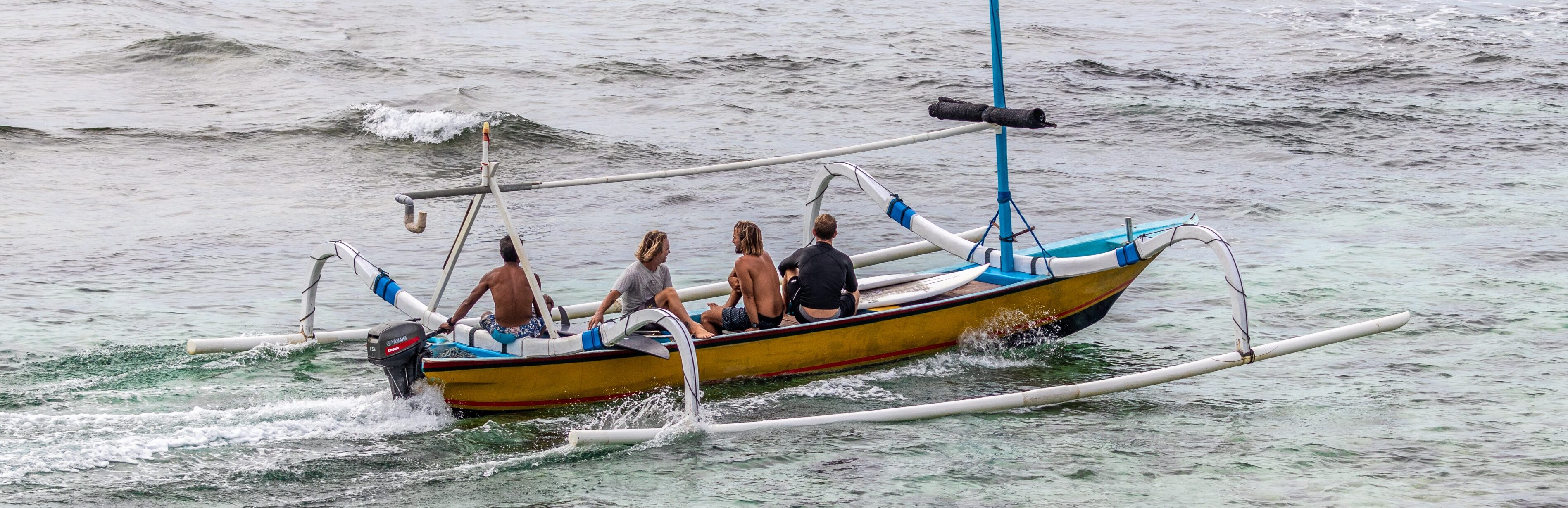
The Airport Reefs are located near to the end of the runway of Bali’s Ngurah Rai International Airport, on both the Kuta side and in Jimbaran Bay. Here you’ll find the Airport Reefs: five world-class outer reefs easily accessible by boat. What could be more fun than taking a traditional boat to surf an outer reef?
Toro Toro is the most popular wave at Bali’s Airport Reefs, known for its long, mellow right-hand walls and easy, predictable nature. This wave is an intermediate surfer’s paradise and the highlight of many surf trips thanks to the fun traditional boat ride to the line-up, relaxed waves, and length of ride.
Airport Right sits just off the end of the airport runway near Kuta, offering playful, long rights on small days and heavy, hollow barrels when the swell picks up. Accessible only by boat, it’s a powerful reef break best suited to experienced surfers.
Middle Reef sits between Kuta Reef and Airport Left and is the most consistent of Bali’s Airport Reefs, picking up the most swell. It’s a powerful low-tide wave offering long, fast walls and barrel sections best suited to experienced surfers. When the tide is too low elsewhere, Middle Reef comes alive.
Tower Located deep inside Toro Toro, this soft reform wave only works when the swell is double-overhead outside. It offers an easy, waist-high right-hander perfect for beginners on massive days, but the shallow reef and strong currents near the navigational pillars require caution.
Airport Left Located just north of the runway that it picks up plenty of swell and is usually 1ft bigger than its neighbours while enjoying unique wind protection from the airport extension. Ideally surfed at mid-tide when the peaks connect, it offers long, soft walls for intermediates and advanced surfers, though the current can be tricky on big days.
Kuta Reef The original “perfect wave” of Bali, this mechanical left-hander offers long, high-performance walls and potential for tight barrels on big days. Best surfed at mid-tide to avoid the shallow reef, it is a dream for intermediates when head-high, though the intense crowd is a major factor due to its proximity to Kuta Beach.
On the biggest days in Bali there are generally 2 recommended options: Take a rest day, or go to a bay that is sheltered from the swell. Jimbaran bay is fortunately only 20 minutes drive from Padang Padang Surf Camp, and has a number of surf spots that can handle any size of swell.
Honeymoon (Jump Off) This crowded, low-quality point break is the essential refuge you seek when the swell is too big to surf everywhere else on the Bukit. Given the tricky take-off, strong currents, and high-consequence entry, we strongly recommend surfing only with a professional surf guide.
Pantai Muaya Tucked in the sheltered corner of Jimbaran Bay, this is the essential beginner-friendly spot when massive swell closes out the rest of the Bukit, as it offers easy access and virtually no current. It works best at mid-tide and is not suitable for intermediate shortboarders due to the wave’s slow, soft nature.
Ahimsa Located in the middle of Jimbaran Bay, this fickle spot only breaks on the biggest swells at low tide. Offering short A-frame peaks that are smaller and quieter than Muaya, it is a fun playground for beginners and local kids, but generally too short for intermediate surfing.
Lifeguard Hut Located just north of Muaya, this high-tide peak breaks both left and right in front of the lifeguard tower. It requires a big swell to work but remains small and soft, making it popular with local kids and suitable for beginners, though generally too small for intermediates.
Kuta beach and Legian have some very high quality surf spots such as Halfway and Padma. Seminyak does not have any high quality recognised spots, but there are rideable waves in front of Ku De Ta.
Widely regarded as the premier peak on the Kuta-Legian stretch, Halfway is the heartbeat of Bali’s beach break scene. Far superior to its neighbours, this dynamic wave offers hollow, fast barrels on low tides and forgiving, high-performance walls on high tides. It is a versatile playground that captures the true energy of Kuta surfing.
Padma Located in front of the Padma Resort, this world-class beach break is a favourite of pros for its playful, rippable walls and right-hand barrels. More sensitive to tide than Halfway, it offers heavy barreling waves at low tide on big swells and perfect performance walls at mid-tide, though the strong northerly current makes it unsuitable for beginners.
Double Six A mellow, “high tide specialist” located in Seminyak, this spot is perfect for longboarders and cruising on small swells (1-2ft). Always smaller than its neighbours, it offers long, stress-free rides on mid-to-high tides but closes out completely when the tide drops.
Located in front of the Alam Kulkul Hotel, this sand-bottom peak offers a versatile experience. On high tides, it is a beginner paradise and a fun, rippable wall for intermediates. On low tides, it transforms into a heavy closeout barrel. A convenient, relaxed spot for surfers of all levels.
Located in front of the famous restaurant, Gado-Gado offers a quieter alternative to Kuta. Dependent on sandbanks formed by the nearby river mouth, it produces punchy A-frames and the fun right-hander known locally as Skate Parks. Works under the same conditions as Padma (best on mid-to-high tides). A friendly spot where intermediates can often find a peak to themselves.
Canggu is a thriving area of Bali with a vibrant surfing community having now replaced Kuta/Seminyak as the most popular holiday/party destination. While there are various high performance and mellow waves in the Canggu area, it does not compare with the Uluwatu area for variety of surf breaks, and can not hold a big swell like the reefs on the Bukit.
The Rivermouth in the bustling hub of Canggu is one of Bali’s premier waves, often frequented by pros thanks to its dynamic and ever-changing nature. This wave seems to bring out the best in surfers due to its surprising power and its “do it now for the show” vibe.
The Sandbar at Echo Beach, located in the tourist hub of Canggu, is one of Bali’s best waves. Just as Toro Toro is Bali’s most fun wave for intermediate surfers, the Sandbar stands out as Bali’s most exciting wave for advanced surfers.
Batu Bolong sits at the heart of Canggu’s longboard surf scene, defining Bali’s longboard culture and attracting surfers of every level. This break delivers remarkably consistent soft waves — perfect for beginners finding their feet and longboarders dancing, gliding, and hanging ten.
Old Man’s sits beside Batu Bolong at the heart of Canggu’s surf scene, offering soft, consistent waves ideal for beginners and longboarders, with lively beachfront cafés, surf schools, and a vibrant mix of locals and visitors that define Bali’s longboard culture.
Echo Beach Left, also known as Little Tahiti, sits just south of Canggu’s main peaks and serves up fast, playful lefts over a shallow reef. Best from mid to high tide, it’s a fun option for intermediate and advanced surfers chasing quick turns and a lively atmosphere without the Rivermouth crowds.
Berawa offers fun, consistent waves just south of Canggu’s main breaks. It’s ideal for surfers progressing from Batu Bolong or Old Man’s, with a mix of forgiving walls and occasional punchy sections. The atmosphere stays relaxed despite its location in front of Bali’s busiest beach clubs.
Pererenan offers a quieter, more relaxed lineup for those looking to escape the main Canggu crowds. While the wave quality is a noticeable step down from Echo Beach, it serves as a reliable “overflow” spot, offering punchy rights and longer lefts over a shallow rock reef that work best on a mid-tide.
Stretching from Kedungu to Yeh Sumbul and beyond, this black-sand coastline offers a return to the authentic, rural roots of surfing in Bali, far from the chaotic south. Balian serves as the area’s consistent swell magnet with its A-frame peaks, while Medewi is famous for the longest, mellowest left-hand point break on the island. Blessed with cool morning offshores from nearby mountains, these less-crowded spots are the perfect sanctuary for surfers seeking space and long, rolling walls.
Balian is becoming an increasingly popular surfing and yoga destination. It’s a place where you visit for a short time and find it very hard to leave. Some never leave. It is reminiscent of how Bali was in the 1970s before mass tourism arrived.
Located far up Bali’s West Coast, it holds a special place in the heart of surfers looking for long, mellow rides. Medewi breaks the mold of powerful Balinese barrels and is almost unique in Bali for being a point break.
Hidden just west of the famous Medewi point, this relaxed rural village offers a long stretch of sand and cobblestone peaks that most surfers overlook. Generally smaller and softer than its neighbour—making it ideal for beginners and intermediates on mid-tides—Yeh Sumbul transforms into a heavy, expert-only barrel machine when the swell maximizes, offering hollow tubes while Medewi is washing out.
Kedungu Located just west of Canggu, Kedungu offers a mellow, soft beach break ideal for beginners and longboarders. While this is a low quality wave by Bali’s standards, the relaxed “Old Bali” vibe and lack of crowds make it a popular spot for those learning the ropes or riding high-volume boards.
Pig Stone Located 20 minutes west of Canggu, Pig Stone is an isolated black sand beach known for its scenic rice field approach and chill vibes. Offering a mix of rocky headland lefts and shifting beach breaks, it is a fun, uncrowded option for intermediates on small-to-medium swells, especially during the shoulder seasons.
Yeh Gangga is widely considered the highest quality beach break between Canggu and Medewi. Consistent and powerful even on smaller swells, it offers stunning scenery and uncrowded peaks. While it serves up fun, rippable walls for intermediates at mid-tide, it transforms into a heavy barrel machine for experts at low tide.
Truck Stops Located midway between Medewi and Balian, this former truck rest stop offers a mellow, uncrowded alternative for surfers escaping the busy lineups. Best surfed on a high tide and small swell, the wave offers soft lefts perfect for cutbacks. However, caution is needed due to the sharp rocks and difficult entry at low tide.
Medewi Right is often overlooked by the crowds flocking to the main point, Medewi Right offers a punchy, high-performance escape for regular footers across the river on the next beach south. It requires an overhead swell to truly turn on, but offers a better angle on the trade winds and relative solitude when the main peak is packed.
Pulukan Located just south of the famous Medewi Left, Pulukan offers a diverse stretch of A-frames and rights breaking over a rock-and-cobblestone bottom. It is the perfect low-tide option when the main point drains out. Punchier than the soft point but friendlier than heavy beach breaks, it offers fun, rippable walls for all levels.
As Bali’s original holiday destination, Sanur offers a relaxed charm far removed from the island’s bustling surf hubs. The waves here see far less traffic than other areas due to the difficulty of boat access, shallow reefs and localism, but for those willing to make the effort during the wet season, it rewards with gems ranging from gentle rollers to world-class barrels.
Hyatt Reef Sitting 2km out to sea, this exposed reef offers a “choose your own adventure” experience: intense, hollow barrels on the Outside Peak and groomed, performance walls on the Main Peak. It is highly sensitive to wind and tide, requiring a glassy early morning high tide to work, and access is best via a boat from Mertasari to avoid the grueling paddle.
Sindhu Right (Tanjung Sari Right) Breaking much closer to shore than other Sanur spots, this wave shifts from a fun, intermediate-friendly wall at high tide to a heavy, expert-only barrel at low tide. On a solid swell, it mimics the fast, long lines of Impossibles, offering world-class rights accessible via an easy paddle from the beach.
Sindhu Left (Tanjung Sari Left) Known for its thick, top-heavy shape, this wave sits across the channel from Sindhu Right. On small days with a mid-to-high tide, it’s a fun, short wall for intermediates and local groms, but when it really turns on with a powerful swell, it transforms into an intense, shallow barrel for experts only.
Sanur Reef Regarded as one of Bali’s premier waves, this fickle right-hander requires a massive swell to produce its famous fast, hollow barrels. While the “epic side” is plagued by heavy localism and shallow reef, smaller swells at high tide offer fun, rippable walls for intermediates.
Serangan (Turtle Island) A wet season “swell magnet” accessible only by boat, Serangan offers consistent peaks that work even on the smallest days. Featuring a punchy main right-hander and softer A-frames, it is a favourite for intermediates, though crowds can be heavy due to its reliability.
Baby Reef Located 700 metres offshore, this beginner-friendly reef break offers slow, soft lefts and rights that are perfect for longboarders and developing surfers. Best surfed on a small swell at mid-to-high tide, it requires a boat for access and is significantly less crowded than the Bukit breaks, especially after 9 am.
The East Coast of Bali, distinct from the more developed West coast and the Bukit region, offers a unique surfing experience with its picturesque landscapes, rice fields, and views of Mt. Agung. Navigating this region demands local knowledge, patience, and effort.
Bali is known as the “Land of the Lefts” because of the many excellent left-hand breaks such as Uluwatu. Keramas stands out as a paradise for regular footers looking for similar machine-like quality barrels as Bingin.
Jasri Set against the stunning backdrop of Mount Agung, this perfect right-hand point break is famous for its relaxed vibe and crystal clear water. It takes a lot of swell to wake up, but when it does, it is truly wonderful, offering incredibly long, high-performance rides that peel for hundreds of metres.
Klotok Known as the most intermediate-friendly wave on the East Coast, this powerful right-hand point break offers long rides with barrel sections and an easier takeoff than its neighbours. Best surfed at mid-tide during calm Wet Season mornings, it holds massive swell but requires surfers to handle “thumping” power and fast walls.
KFC Named for the scorching black sand that burns your feet on the run to the water, this is the easiest and least crowded wave in the Keramas area. Best on a mid-to-high incoming tide with small swells, it offers long, intermediate-friendly right-handers when the main peak is too heavy or busy.
Biaung, Lembeng & Kubur This stretch of black sand beaches offers a functional, uncrowded alternative during the wet season (Jan-March). While the water quality can be poor and the banks shift constantly, they offer powerful, punchy waves on small-to-medium swells. Best surfed on a low-to-mid tide to avoid the backwash.
Ketewel A wet season favourite, Ketewel offers a fast, hollow right-hander breaking over a sharp reef. It requires a high tide (2m+) to work safely. On small days, it is a fun performance wave for intermediates; on big days, it transforms into a heavy, board-breaking barrel for experts.
Cucukan A “paradise found” spot surrounded by rice fields and palm trees. Cucukan offers a clean, fast, and rippable right-hander that is perfect for intermediate shortboarders on head-high days. Strictly a high-tide break due to the sharp reef, it offers a friendlier alternative to the heavy slabs nearby.
Carparks Located just a short walk south of the famous Keramas main peak, Carparks serves as a punchy, high-performance “overflow” spot. While fickle and often short, it offers a powerful ramp for airs and turns. Best surfed on a mid-tide with small-to-medium swells, it is a favourite for advanced surfers looking to escape the main crowd.
Also known as Bali’s offshore islands, there are also great waves a short boat ride from Sanur on the two islands of Nusa Lembongan and Nusa Ceningan. These islands have some quality breaks that work best in the dry season as their north west-facing direction which is perfectly offshore for the south easterly trade winds.
Playgrounds is located on the nearby island of Nusa Lembongan, Playgrounds is a “user-friendly” A-frame reef break that offers stunning views and clear water. A favourite for intermediates, it features a long, rippable left and a punchy right.
Lacerations (Nusa Lembongan) Located just across the channel from Playgrounds, Lacerations is the island’s “crown jewel.” On overhead swells, it transforms into a world-class, hollow barrel that breaks over shallow reef. On smaller days, it offers a punchy, high-performance wall suitable for intermediates. Known for its sharp reef and competitive lineup.
Razors often less crowded than its famous neighbours, Razors is a stunning long left-hander named after its sharp coral bottom. A versatile wave, it offers gentle walls for beginners and longboarders on small days but transforms into a fast, hollow challenge for advanced surfers when the swell picks up. Surfable on most tides.
Marked by a rusting crane vessel on the reef, Shipwrecks is the island’s premier right-hander. It offers powerful, high-performance walls perfect for turns on smaller days and heavy barrels when the swell picks up. Strictly a mid-to-high tide break, access is best via local boat to save energy.
Located across the yellow bridge from Lembongan, Ceningan is the area’s “swell magnet.” When other spots are flat, this cliff-front reef offers head-high waves. It is heavy, moody, and known for strong currents and rogue sets. Best for strong paddlers on mid-to-high tides during small swells.