

Ulutimate Guide to surfing The Canggu Rivermouth
- Swell Direction
- S, SSW, SW
- Wind
- No Wind
- Surf Height
- Head High
- Tide
- High
- Ability Level
- Intermediate, Advanced, Expert
- Local Vibe
- Doable
- Crowd Factor
- Heavy
- Spot Rating
- Perfect
- Shoulder Burn
- Light
- Water Quality
- Dirty
- Hazards
- Rocks, surfers, river run-off
- Bring Your
- Fish, Funboard, Shortboard
- Access
- Easy
- Bottom
- Sand, Rock
- Best Season
- Dry Season (April-October)
The Rivermouth in the bustling hub of Canggu is one of Bali’s premier waves alongside The Sandbar’s forgiving walls, and is often frequented by pros thanks to its dynamic and ever-changing nature. This wave seems to bring out the best in surfers due to its surprising power and its “do it now for the show” vibe. Download our free PDF guide to all 73 Bali surf spots to plan your trip around the right break for every tide, swell and wind.
Understanding the Rivermouth wave
The wave at Canggu Rivermouth is a high-performance playground featuring a wedgy right-hander that moves at an ideal pace. The wave breaks over a submerged rock shelf near the takeoff zone, with the second half finishing over sand. It is not a wave where you race down the line, yet it offers plenty of power for explosive surfing. The wave starts off as a wedge, forcing you to take off deeper than expected. The takeoffs are soft and small, and — similar to Toro Toro’s soft peak — the wave quickly stands up and grows just after takeoff.
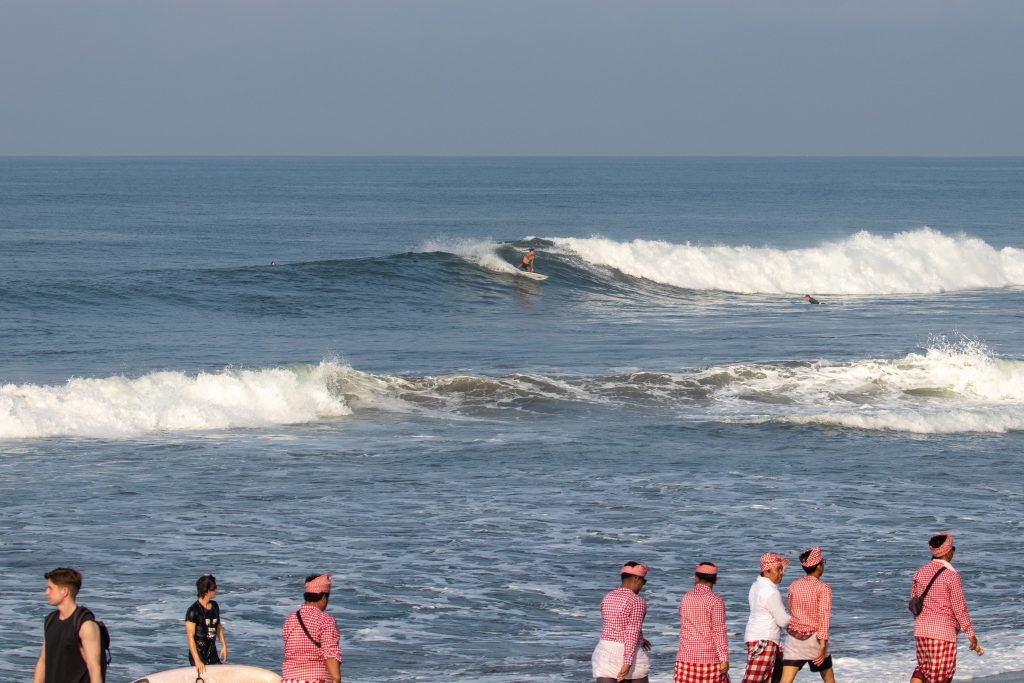
This wave encourages you to do your best surfing with deep, full-rail bottom turns, giving you time to redirect speed straight up into your top turn. Repeat this all the way to the beach, and you have just experienced The Rivermouth. One good wave is usually enough to make you a true believer.
The wave breaks like this from knee-high to overhead. Even small days can be punchy. On bigger days, the wave barrels from takeoff and offers extreme turn sections before ending in a hollow closeout. At double-overhead, the wave begins to close out, but The Sandbar will be working better. Not sure how to read a swell forecast? Read our guide to reading a swell forecast to know what you are getting into.
The wave forms the most organised lines on a high tide, and works well even on an extreme high tide. In fact, this is a great place to surf when the tides are too high for Uluwatu’s reef breaks, if you do not mind the change in direction. Learn more about understanding tides for more detail.
On a low tide, the wave can still be surfed but the waves never form properly without really standing up or offering a good wall to work with. On a mid-tide, the wave begins to take form; however, the lines are not as defined, the takeoff becomes very soft, leading to missed waves, and a shoulder never really develops, inhibiting your ability to predict what happens down the line. Learn more about planning your surf session for more detail.
To add to the fun, there is a less-often surfed but still very fun left. Although this wave is only good for one turn, it will be your best turn. After a steep takeoff, you drop into a shorter wall with tons of speed. It is perfect for blowing fins out or going for an air. But be cautious — duck diving after a left is tricky due to shallow water, and the paddle back can be tough with the current pulling you toward the right-hander.
Safety and dangers at the Rivermouth
This wave breaks at the mouth of a river draining a densely populated part of Bali. Water quality becomes an issue after rain. The water is often murky, making it hard to see the bottom — which is sometimes closer than you think. The biggest danger is from your own board, especially because this wave encourages more aggressive surfing than usual.
How to enter the surf at the Rivermouth
Paddle out via the rip current just south of the river. Do not cut the corner toward the takeoff zone, as you will be paddling against water running off the rock shelf.
How to exit the surf at the Rivermouth
Let the whitewater push you straight in. The inside is soft sand and presents no hazards.
When is the best time to surf the Rivermouth?
High tide is ideal. This is when the wave organises into defined walls with a clear takeoff zone and long sections. Mid-tide can still work, but the waves are harder to read and sometimes unload without warning. Low tide is usually too shallow, fast, and prone to closeouts.
This is a year-round surf spot. During the wet season, wind is often onshore, but mornings are usually glassy — unless a western storm system is in play. During dry season, the trade wind blows side shore but builds more slowly here than on the Bukit. Shoulder seasons are ideal, as light wind conditions often last throughout the day. Read our guide to Bali’s surf seasons for more detail.
Can beginners surf the Rivermouth?
No, this is not a beginner-friendly wave. The power, shallow reef, and rip currents make it unsuitable for those still learning basics. Beginner surfers and Level 2 surfers are best suited to the surf breaks Batu Bolong and Old Man’s if surfing in Canggu. However, there is no convenient channel making paddling easier, and the waves are less predictable compared to the beginner surfing paradise of Baby Padang.
Can intermediates surf the Rivermouth?
This is a good wave for intermediate surfers who want to improve when head-high and below; however, intermediate surfers are much better suited at Berawa, where the waves are softer and slower than they are here. At this wave, you do not need to race down the line, giving you time to focus on technique. However, the break is often crowded with experienced and hungry surfers, which can make it hard to get waves. Another downside is water quality — rain can bring runoff from the polluted river.

Things to do near the Rivermouth
Outside the surf, Canggu is known for its beach clubs, yoga studios, and lively café scene. Spend the afternoon at a beachfront cafe like The Surfer’s Bar to soak up the vibes, or take a yoga class at one of the many nearby studios. The area is also great for boutique shopping and sunset views.
Where to stay near the Rivermouth
Stay near the beach for easy surf access. Options range from surf hostels to luxury villas. Many surf camps and guesthouses offer walking-distance proximity to the break.
Where to eat near the Rivermouth
Canggu is a food hub. For post-surf refuelling, try local favourites, like Warung Varuna, the viral hit Gigi Susu, or visit the world’s largest beach club, Atlas. Healthy options and international cuisine are widely available throughout the area.
Why surfers keep coming back to the Rivermouth
There is a laid-back vibe in Canggu that you do not find in other parts of Bali. Although the lineups are competitive, people seem more relaxed about it. Maybe it is because the waves are not taken as seriously as they are in Uluwatu — whatever the reason, there is something inviting about this place.
Despite the hectic traffic, pollution, and overcrowding, Canggu keeps surfers coming back year after year. Whether it is the waves or the people, something about the beach and the energy continues to draw surfers in.
If you are an intermediate or advanced surfer looking to surf Bali’s best waves, join our surf camp for expert guidance and personalised coaching.