

The ultimate guide to surfing Nyang Nyang
- Swell Direction
- S, SSW, SW
- Wind
- North
- Surf Height
- Head High
- Tide
- High tide
- Ability Level
- Intermediate, Advanced, Expert
- Local Vibe
- Welcoming
- Crowd Factor
- Moderate
- Spot Rating
- Fun
- Shoulder Burn
- Medium
- Water Quality
- Clean
- Hazards
- Currents and heavy waves
- Bring Your
- Shortboard
- Access
- Motorcycle access direct to beach
- Bottom
- Coral
- Best Season
- Wet Season (November-March)
Nyang Nyang is one of Bali’s advanced surf spots, in the famous Uluwatu area reef breaks. Unlike the other Ulu spots, it sits on the quieter south coast of the Bukit, so it has a different character to the more famous breaks on the west-facing side of the peninsula.
Nyang Nyang is the go-to Uluwatu spot in the rainy season, or when the surf is very small. It is a high-tide right-hand reef break that picks up plenty of swell, sitting open to the Indian Ocean, which is why it can be working when bigger, more sheltered breaks have gone quiet. Our guide to the science of waves explains why an open, exposed break like this picks up so much more swell than a sheltered one. For years you could surf it with just a few friends, but it has become much busier recently and now draws top Indonesian surfers, including Rio Waida, and visiting pros.
In the dry season Nyang Nyang is blown out by the south-east trade winds and is often too big. It comes into its own in October and November, when the trade winds and swell drop off. March and April are also excellent, as the winds are very light.

Nyang Nyang is a short ride from Suluban beach and worth checking when the famous reef at Uluwatu is too small and the winds are very light.
Completely out of character for the area, a Russian developer placed a retired Boeing 737 on top of the cliff and turned it into a clifftop villa, now known as the Private Jet Villa. It is not very surfy or Balinese, but it does look good on Instagram.
Access to the break used to be very difficult. There was a gate at Puri Bali Resort and a huge climb down. The cliff is so high that looking at the beach below is like looking out of an aeroplane. The upside was that it kept the crowds at bay, and only serious surfers would make the trek. Now there is a steep motorcycle track that leads all the way down to the beach, where there are some modern cafes and traditional warungs. You can park at the top of the cliff, and the beach itself is a great spot for food, a cold drink, sunset and hanging out after a surf.
Nyang Nyang surf conditions: tide, swell and wave shape
Nyang Nyang is a high-performance, powerful wave that breaks mostly right for about 200 metres. There is also a short, shifty left for the goofy footers, but it is the right-hander that is the quality wave. It is best on a spring high tide; 2 metres of tide is optimal.
It is not surfable at low tide and sections too much at mid-tide. In general, the higher the tide, the better the wave shape.
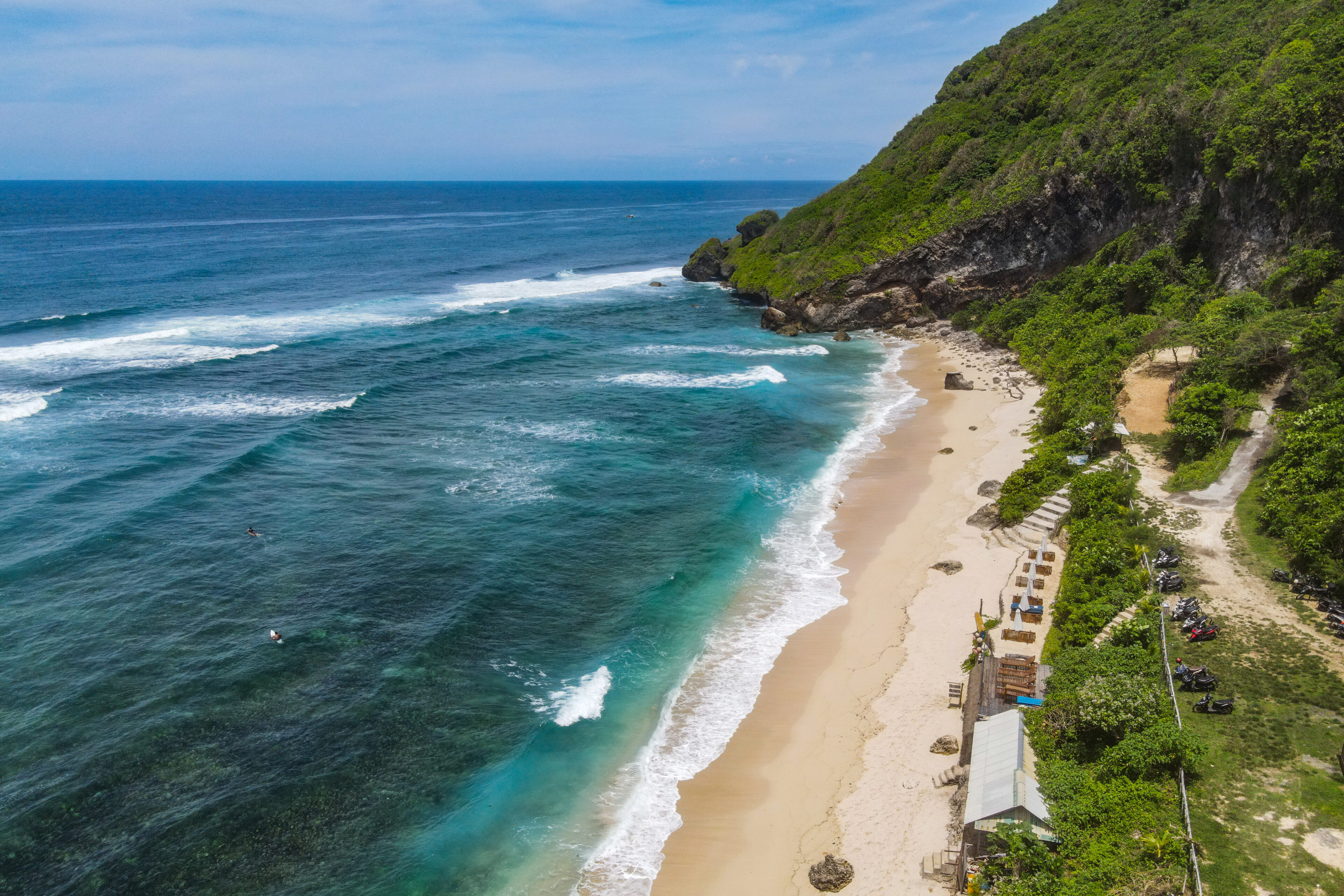
In the dry season, the wind is mostly from the south-east, which blows out the wave. Nyang Nyang is one of the Bukit’s classic wet-season waves, but strong westerly and south-westerly winds also make it unrideable.
Given it is the closest wet-season wave to Uluwatu, it is busy, especially on a small swell. For a less-crowded session, head over to the quieter reef at Gunung Payung or wait for the tide to come up for the high-tide wave at Pandawa.
When is the best time to surf Nyang Nyang?
Nyang Nyang is best on a northerly wind, which is offshore. It only needs a small swell to work because it is so exposed, and it is a wet-season wave that works best from October to April. From May to September it is mostly too big and blown out. For more on how Bali’s seasons and winds decide which breaks come alive, our guide to Bali’s surfing conditions explains the seasonal pattern across the island.
Northerly winds are very rare in Bali, so in practice the best time to surf it is when there are very light winds from any direction. Early morning is the most reliable window.

Is Nyang Nyang dangerous? Hazards to know before you paddle out
Nyang Nyang is a powerful, high-performance wave, and the main hazard is the heavy way it breaks. At lower stages of the tide the reef is shallow and unforgiving, which is one reason we only surf it from mid to high tide. The wave is also localised: experienced local surfers are usually sitting in the best position on the peak, so patience and waiting your turn are essential, especially on a small swell when the take-off zone is busy.
The access adds its own risk. The track down the cliff is steep, and the cliff itself is very high, so ride down carefully, leave your vehicle at the top if you are not confident on the descent, and keep an eye on the tide and on the energy you will need for the climb back up.
Can beginners surf Nyang Nyang?
No. Nyang Nyang is an advanced wave, it is mostly too big, and it is very difficult to bring a beginner board down on a motorcycle. A much better option for beginners is the gentler waves at Baby Padang, which is sheltered from both the biggest swells and the strongest winds.
Can intermediates surf Nyang Nyang?
Nyang Nyang is not a natural choice for most intermediates. It is a fast, powerful right that breaks over shallow reef and rewards confident take-offs and good positioning. A strong intermediate who is comfortable surfing a reef can enjoy it on a small, clean swell at the top of the tide, when the wave is at its most forgiving, but it is easy to get caught inside or out of position when it is bigger or busy. If you are still building reef confidence, spots such as Pandawa at high tide or Baby Padang are better places to find your feet first.
Food, drinks and warungs at Nyang Nyang beach
At the bottom of the access track, just back from the sand, you will find a handful of warungs and beach bars. Nyang Nyang Bar & Restaurant opens early, from around 7am, and serves breakfasts, pizza, Indonesian staples and cocktails with a view over the bay, which makes it a good spot for a post-surf meal. Nearby, Warung Party People keeps it simple with mie and nasi goreng, fresh coconuts and cold Bintang, and rents out sun loungers and umbrellas on the beach. Utilis Bali Bar is a quieter option for a cold drink and a lounger between sessions.
Two practical notes: some places are cash-only, or do not always have card machines working, so bring rupiah, and expect to pay a small fee for loungers and umbrellas if you want them.
Where to stay near Nyang Nyang
Nyang Nyang is more secluded than the breaks on the west side of the Bukit, and the lanes above the beach have a growing number of small hotels, guesthouses and villas. It is quiet and a little out of the way, so a scooter or car is more or less essential, and the roads can be dark at night. The headline curiosity is the Private Jet Villa, the converted Boeing 737 on the clifftop, built by the same Russian developer behind the nearby Bubble Hotel Bali, where you sleep in a transparent dome close to the sand.
For a surf trip, though, most people prefer to base themselves in the wider Uluwatu and Pecatu area, a short ride away. Staying near Padang Padang and Bingin puts the whole peninsula within reach, so you can surf Nyang Nyang when it is on and simply move to another break when it is not, rather than being tied to a single, tide-dependent wave.
Is Nyang Nyang worth surfing?
Nyang Nyang is an excellent option when the main reef at Uluwatu is too small and the winds are light: a high-quality right-hander with the occasional left, in a setting that is well worth the trip down the cliff. The trade-offs are real. It only works well at the top of the tide, it is frequently too big in the dry season, and it is exposed to cross winds, so it rewards surfers who can read the conditions and pick their day. If you would like help doing exactly that, our advanced surf guiding in Uluwatu takes experienced surfers to the right break at the right tide, Nyang Nyang included, based on twenty years of local surf checks and swell and wind data.