

The Ultimate Guide To Surfing Berawa
- Swell Direction
- S, SSW, SW
- Wind
- No Wind
- Surf Height
- Head-high
- Tide
- Mid-Tide
- Ability Level
- Intermediate, Advanced
- Local Vibe
- Welcoming
- Crowd Factor
- Moderate
- Spot Rating
- Fun
- Shoulder Burn
- Light
- Water Quality
- Fair
- Hazards
- First time surfers, loose/flying/ditched longboards, shorepound, heavy-rain
- Bring Your
- Fish, Funboard, Longboard, Shortboard
- Access
- Easy
- Bottom
- Sand, Rock
- Best Season
- Dry Season (April-October)
Berawa Beach offers a mix of approachable and exciting waves set against the backdrop of Bali’s most dynamic beach clubs. Sitting just south of the main Canggu breaks, it is a popular choice for intermediate surfers who have graduated from the beginner waves at Batu Bolong and Old Man’s, and are looking for something a little mellower than Echo Beach Left, The Sandbar, or The Rivermouth. Despite being framed by beach clubs and cafés, the lineup retains a relaxed atmosphere, and the variety of peaks means there is usually something to ride at any tide or swell size.
Download our free PDF guide to all 73 Bali surf spots to plan your trip around the right break for every tide, swell and wind.
Understanding the Berawa wave
Berawa delivers a mix of a shifting beach break and two reef setups, all within easy view of Finns Beach Club and Atlas Beach Club. The main peaks—The Peak, The Ledge, and The Bombie—each have their own character, working across different tides and swells.

One great thing about surfing Berawa is the room to spread out. You can always walk south down the beach to find an uncrowded peak. These banks vary in quality but can all turn on when conditions line up. Despite being close to Canggu’s busiest zone, these southern peaks remain quiet, mostly because they require a bit of a walk for access.
The Peak
The central attraction at Berawa is The Peak, a sand-bottomed wave that changes personality with the swell size.
On smaller days, it breaks close to shore, behaving like a playful shorebreak similar to Dreamland’s Inside Left. At shoulder-high to overhead, the sandbank divides into two main peaks: a southern peak near the main beach road that throws short, fun lefts and rights, and a northern peak in front of the beach clubs that produces longer, better-shaped walls. When the swell is overhead and the banks align, Berawa lights up—offering a running right-hander from the north peak that links several turn sections with the occasional barrel.
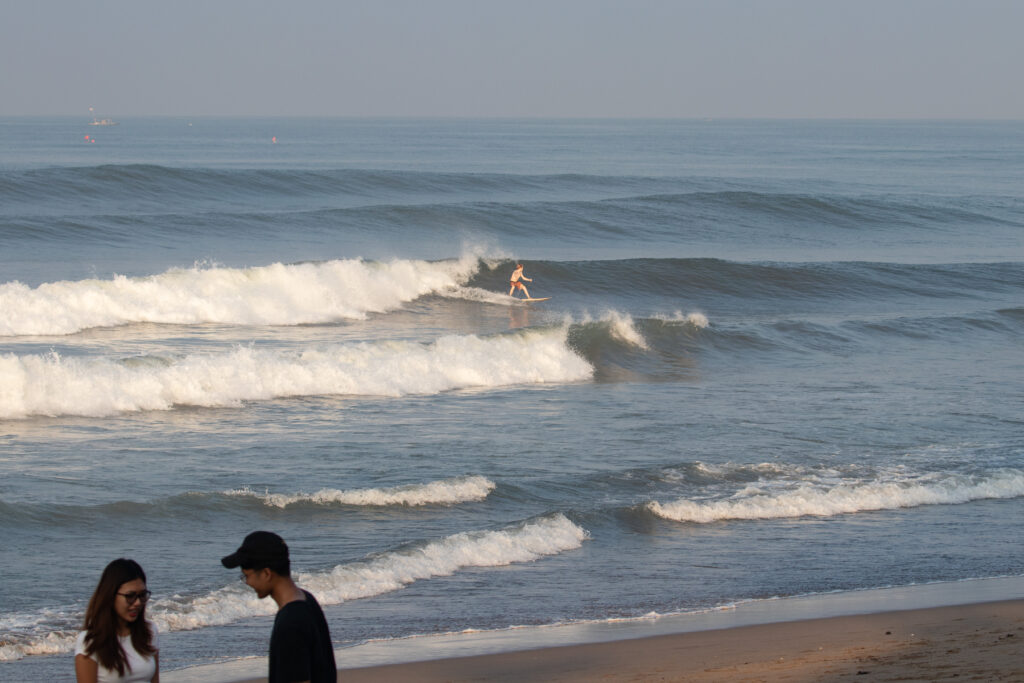
The Peak performs best on a mid-tide, when the waves stand up and hold shape. At high tide, it fattens out and reforms closer to shore, while on low tide, it tends to close out. Unless the banks are perfect, Echo Beach Left’s punchy peak, The Sandbar’s forgiving walls, and The Rivermouth’s wedging power usually offer faster and hollower walls for advanced surfers. But for intermediates riding mid-lengths, funboards, or oversized shortboards, The Peak hits the sweet spot—similar to Balangan’s reef break in the Uluwatu area.
The Ledge
The Ledge is one of the few waves in Canggu that works on a low tide. This right-hander breaks just south of the main access road over a rock shelf that only starts influencing the wave as the tide drops. When it is on, The Ledge delivers fast, hollow, and short right-hand barrels that are difficult to paddle into but rewarding if you make the drop.
This wave is shallower and more technical than it appears. On smaller days under head-high, the section runs too quickly to make without a “doggy door” exit. This keeps the crowd minimal and limits The Ledge to advanced surfers comfortable with shallow, punchy reefs.
The Bombie
Further out to sea lies The Bombie, a soft right-hander that breaks in deeper water toward Nelayan Beach. It needs a solid swell to start breaking properly; otherwise, it simply peaks and rolls through to the shoreline without forming a wall.

At mid tide and around one-and-a-half times overhead, The Bombie can produce long but slow walls, with a steep takeoff that fades into soft shoulders as it approaches the inside. Because it breaks so far from shore, it is most popular with SUP and foil riders who can make the most of its drawn-out faces and gentle takeoffs. Despite how inviting it looks from the beach, it is not a shortboarder’s wave—too soft, too slow, and rarely powerful enough to carve.
Safety and dangers at Berawa
The biggest hazard at Berawa is being hit by a surfboard — either your own or someone else’s. With many intermediate surfers stepping up from the beginner breaks, it is common to see boards ditched or ridden without control. After heavy rain, the water quality can deteriorate due to drainage from the main road, which runs directly into the south peak and The Ledge.
How to enter the surf at Berawa
Getting into the water at Berawa is generally straightforward. After periods of heavy rain, a channel forms in front of the main road where runoff flows out to sea — this current can help pull you toward the south peak. To reach the north peak, paddle out from directly in front of Finns Beach Club. A shorepound sometimes forms where swells from The Bombie meet the shoreline on the north end of the beach, and it can occasionally extend to where the right from the north peak ends. However, it is far less intense than the shorebreak at Batu Bolong.
How to exit the surf at Berawa
Exiting the water at Berawa is simple. Unless you are surfing The Bombie, just paddle straight in toward the beach. The shoreline is free of rocks, so you can safely ride all the way in. If you are coming in from The Bombie, angle south to avoid the heavier shorebreak that forms on the north end of the beach.
Can beginners surf Berawa?
On the smallest swells, beginners can surf at Berawa, but Batu Bolong’s longboard-friendly break and Old Man’s mellow reform are far more suitable. Berawa often lacks a clear channel, and the waves can be inconsistent and harder to catch due to backwash. Paddling can be tiring here, and the shifting peaks make it less predictable than Baby Padang’s beginner-friendly reef. This wave is great for learning the fundamentals of surfing, such as the functional stance, steering and turning a surfboard, and how to paddle a surfboard (hot tip: check our beginner video tips and tutorials).
Can intermediates surf Berawa?
Yes. Berawa is arguably the best wave in Canggu for intermediate surfers and an ideal place to start transitioning to smaller boards.
When is the best time to surf Berawa?
The best time to surf Berawa and the rest of Canggu is during the shoulder seasons, when winds are lighter and conditions are more consistent. These months — typically March to April and again from November to early December — bring clean, glassy mornings and moderate swells that suit Berawa’s mix of peaks and sandbanks.
During the dry season (April–October), steady Indian Ocean swells deliver the most consistent surf. Early mornings are usually dead calm or light offshore thanks to cool mountain air, but from around 10 a.m., the southeast trade wind picks up, blowing sideshore late morning before switching to onshore as the land heats up from the midday sun.

The wet season (November–March) brings more variable conditions, but mornings are often glassy unless a weather system from the west pushes onshore winds. These systems are most common in January and February. Wave size stays consistent, usually in the shoulder-to-head-high range, with lighter crowds. The smaller, softer waves during this season are well-suited to intermediates refining their technique or beginners progressing from Batu Bolong.
All of Canggu’s beaches face the same general direction, so when the wind turns onshore, there are limited local options for shelter. Even so, Berawa is a reliable year-round surf spot, offering at least some form of rideable wave in every season. Read our guide to Bali’s surf seasons for more detail.
Where to stay in Berawa
Berawa is one of Canggu’s most vibrant areas, with accommodation options ranging from luxury villas to budget-friendly guesthouses. The Legong Keraton Beach Hotel sits directly on the sand and remains one of the few beachfront hotels in the area. Staying as close to the beach as possible is recommended, as Canggu’s traffic can make even short trips slow. Being within walking or short scooter distance of the lineup saves time and makes early surf sessions much easier.
Where to eat in Berawa
Berawa has quickly become a culinary hub in Canggu, with new restaurants opening regularly. You will find everything from high-end dining and trendy cafés to simple warungs serving traditional Indonesian dishes. Whether you are after post-surf coffee, healthy bowls, or a full dinner, Berawa offers more than enough choice within a few minutes of the beach.
What to do for non-surfers in Berawa
Non-surfers have plenty to enjoy in Berawa. Watch the lineup from Finns Beach Club, which overlooks the main break, or spend the day at Atlas, Asia’s largest beach club, located just north along the beach. For a quieter experience, relax with a drink or meal at the Legong Keraton Beach Hotel on the south side of the beach road, where the atmosphere is calmer and the views are just as good.
Why Berawa is Canggu’s happy medium
Berawa is the perfect middle ground in Canggu’s lineup of surf spots. It bridges the gap between Batu Bolong’s longboard-friendly rollers and Echo Beach’s punchier, performance-oriented walls. The Peak offers the most consistent and accessible surf, while The Ledge and The Bombie provide more challenge and variety when conditions align. Combined with its beachside cafés, surf-friendly accommodations, and lively social scene, Berawa delivers the complete Canggu surf experience — both in and out of the water.
If you are a beginner or intermediate surfer looking to surf Bali’s best waves, join our surf camp for expert guidance and personalised coaching.